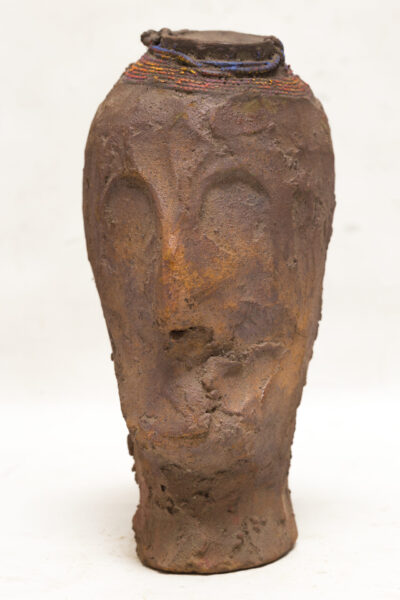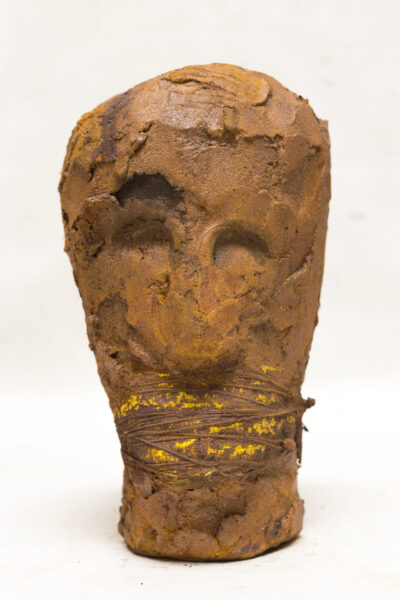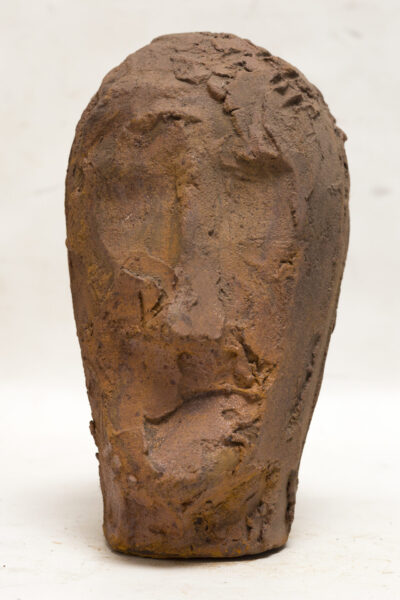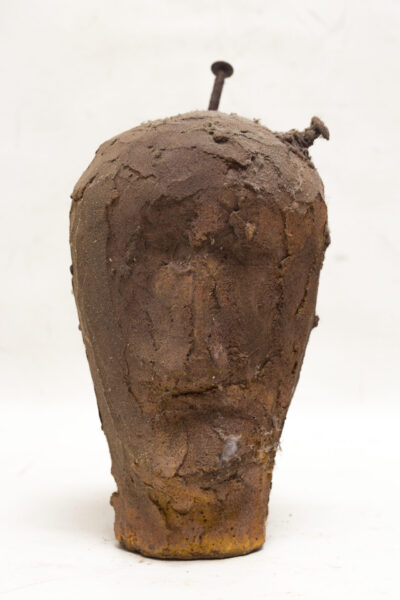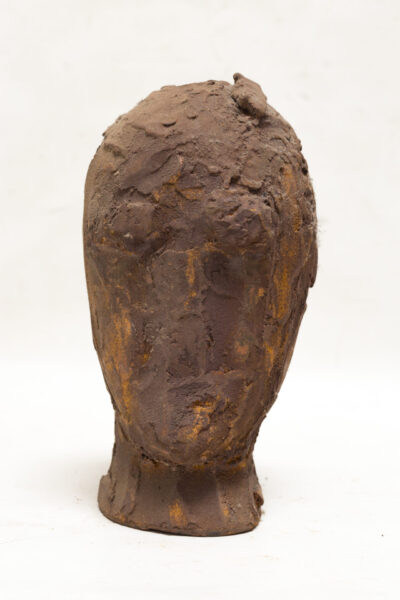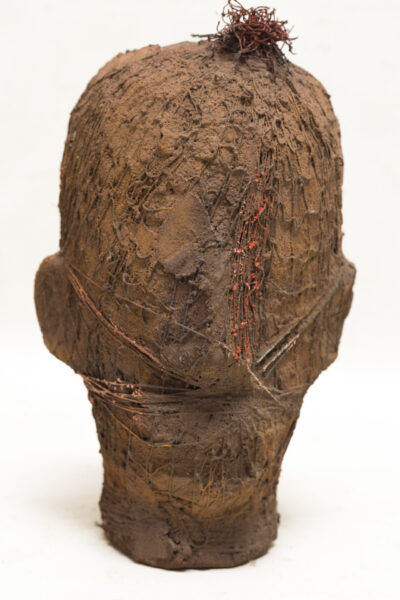

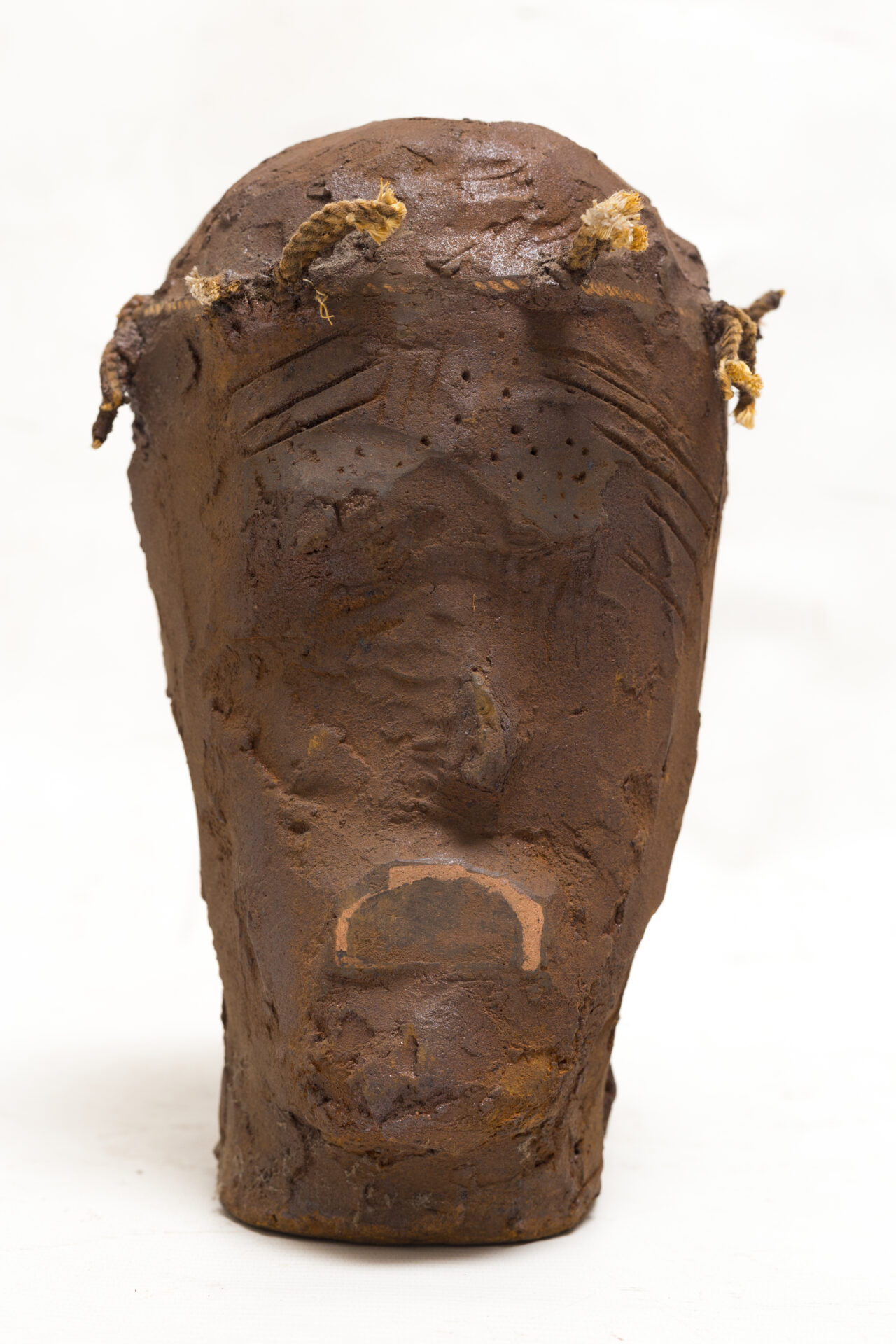
Faceless Head No.068
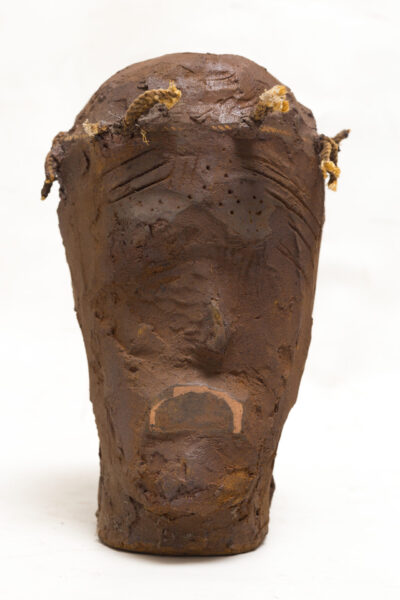
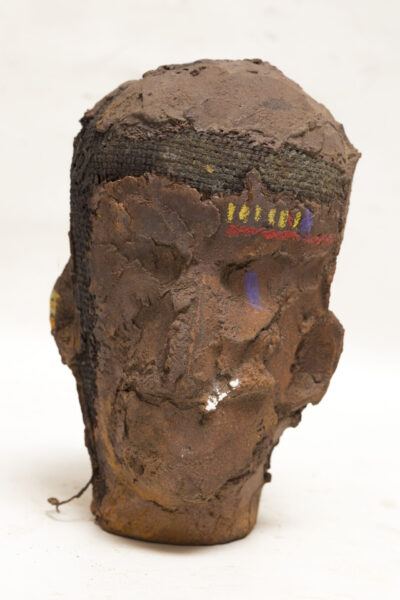
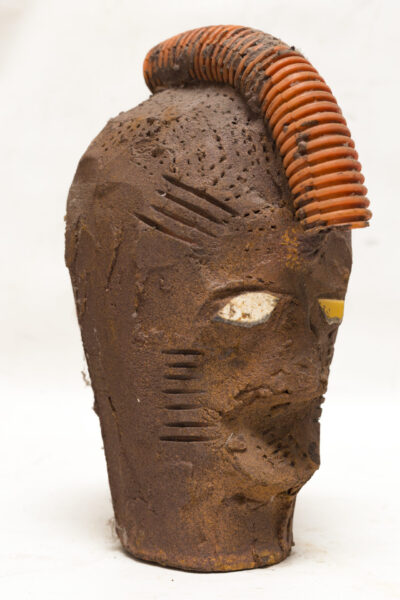
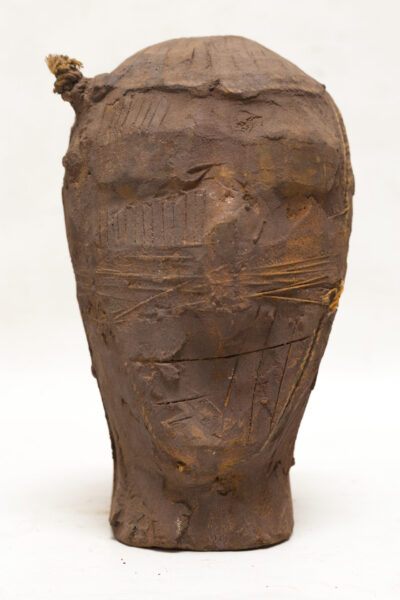
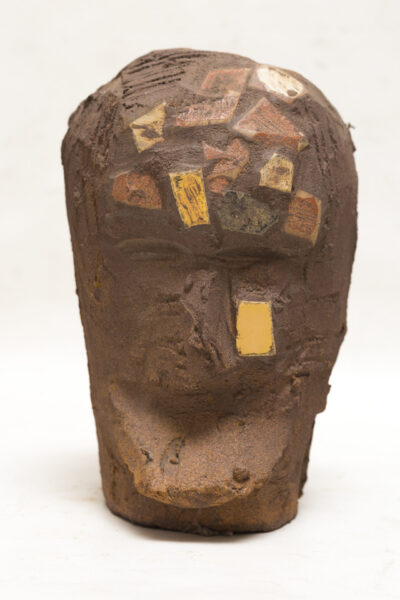
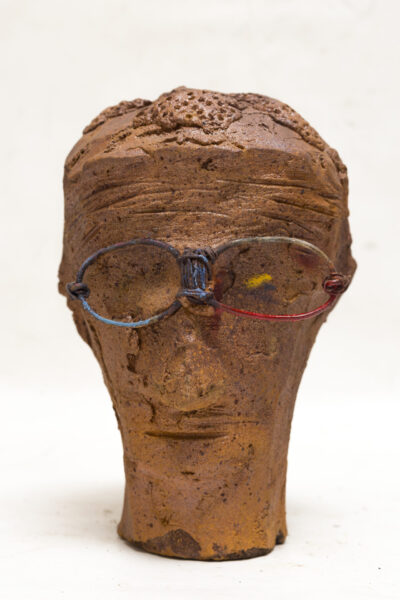
This head, rough and deeply scarred, bears knotted ropes that seem to pierce through the material. The barely sketched face appears trapped in a vise, where wrinkles, hollows, and a carved mouth testify to a heavy and silent story. The perforations and scars intensify the impression of a body marked by suffering, yet still standing.
Within 100 Faceless Heads, this piece evokes wounded memory and the burden of human experience. It embodies the stigmas of pain, but also the strength of endurance and resilience.
The Scars of Memory remind us that every existence carries its invisible marks. These scars are not merely wounds: they become evidence, intimate archives, and sources of dignity.
A sculpted memory, a universal story
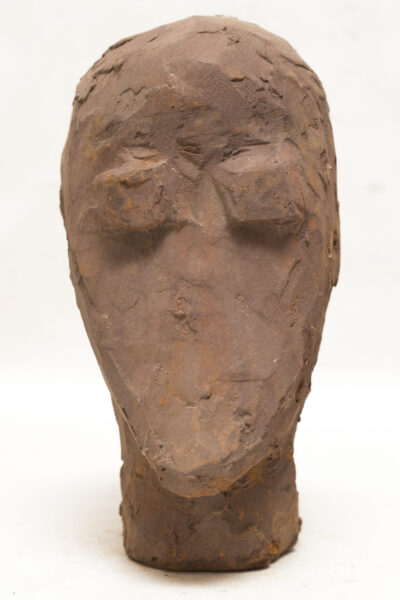
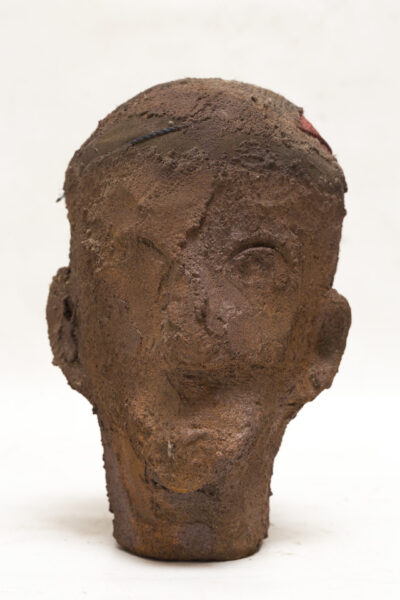
The collection “100 Heads WITHOUT Faces” brings together one hundred unique sculptures, handcrafted in terracotta and rusted metal. These works embody the invisible faces of our collective history: undocumented migrants drowned at sea, victims of slavery, the forgotten of genocides, the nameless whose memories fade away.
Each of these heads, deliberately devoid of features, symbolizes a life, a past, a suspended story. Without a face, they become silent bearers of individual and collective memories, inviting us to reflect on our shared humanity.
Through this series, the artist invites us to acknowledge these erased lives and rebuild bridges between past and future. “I open the beers of the undocumented who drown in seas and deserts, I denounce the macabre noises of the cannons of wars…,” he declares, expressing the emotional and political strength of this work.
“100 Heads WITHOUT Faces” is far more than an art collection: it is a sculptural photo library, a call to memory, to dialogue, and to a deeper understanding of our common roots.
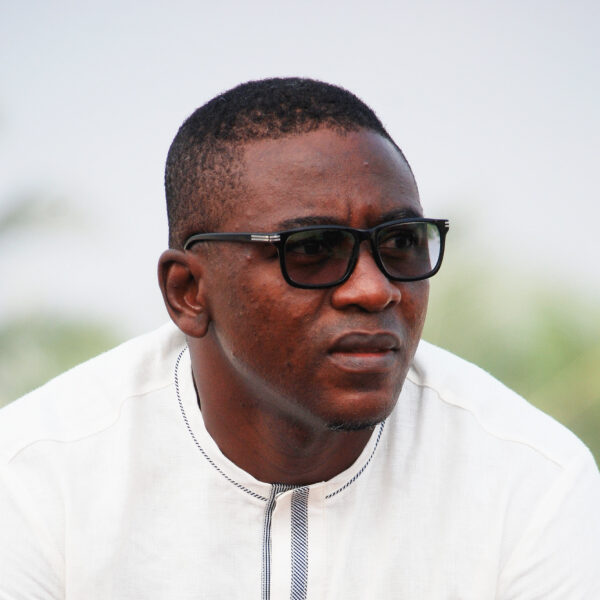
Passionate about collective memory and questions of identity, the artist works with clay and metal to give form to what is often invisible or forgotten. Through the series “100 Heads Without Faces,” he offers a space for reflection and dialogue on the wounds of the past and the hopes for a more just future.