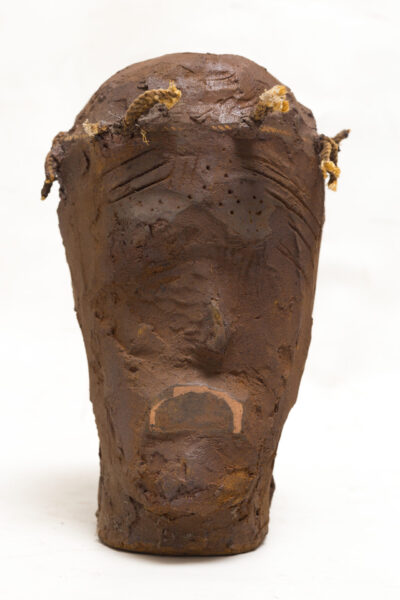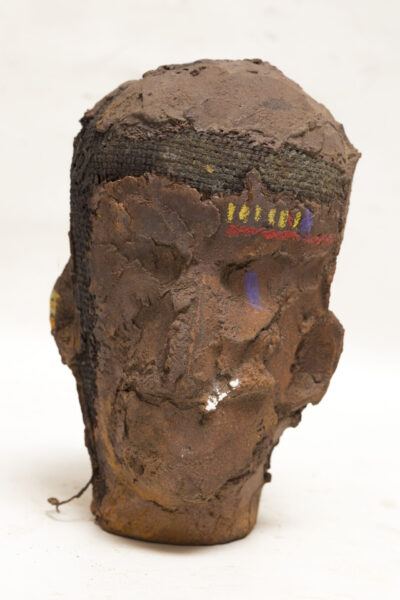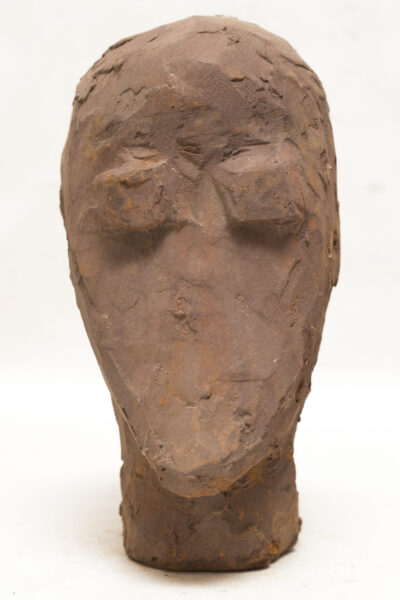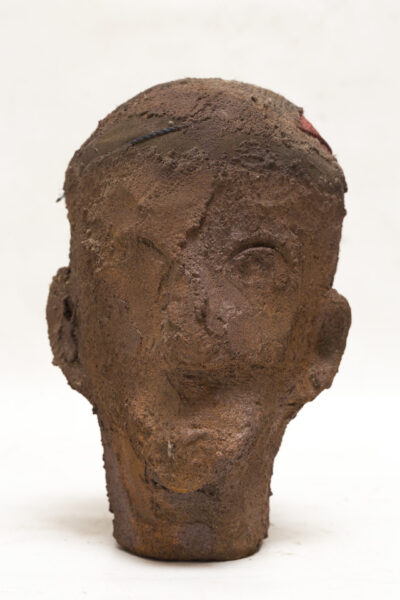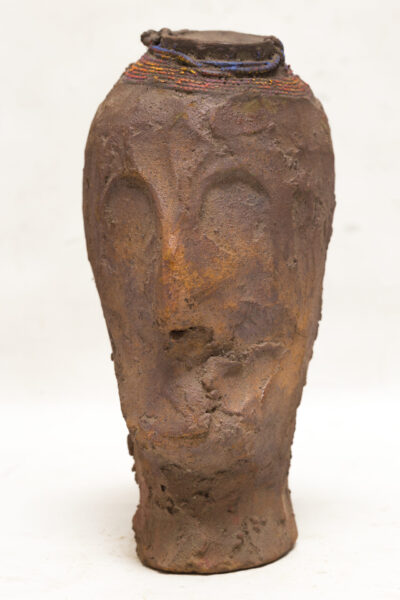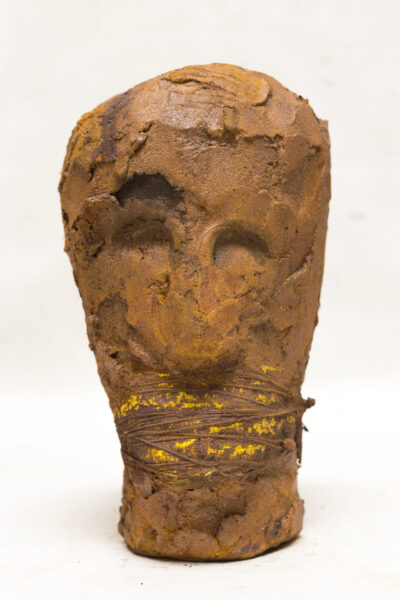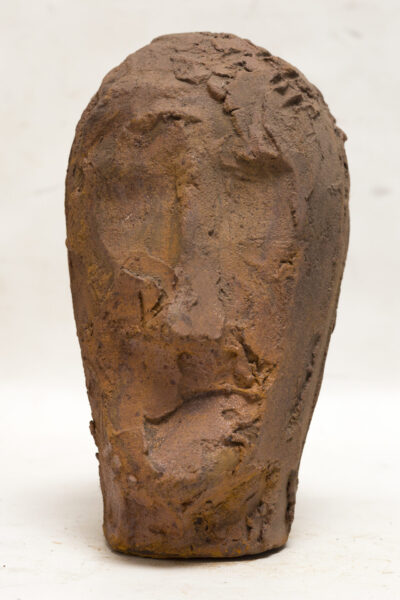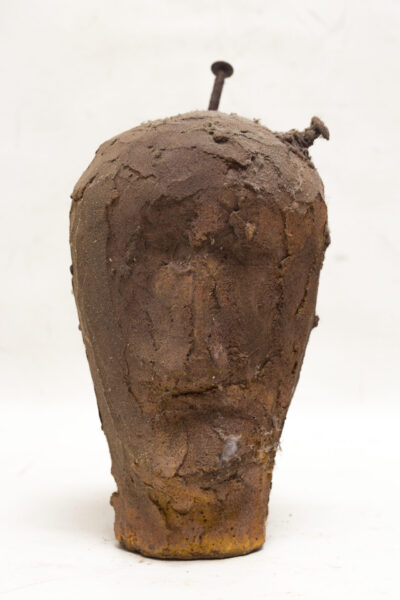

Head Without a Face No. 067
Artistic Description of the Head
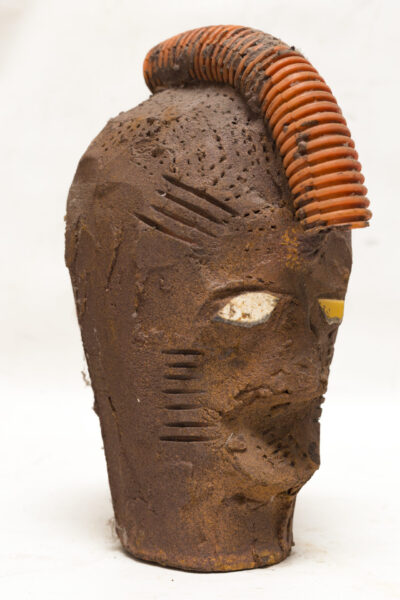
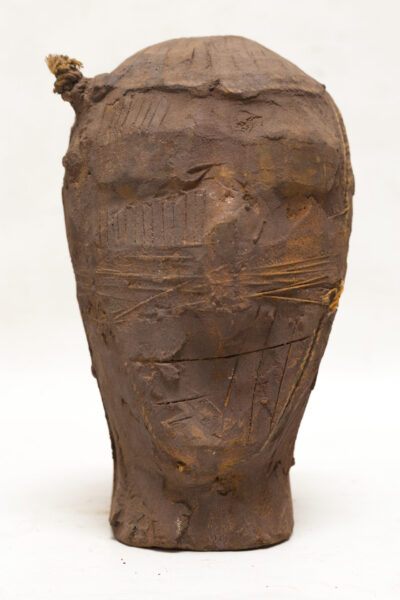
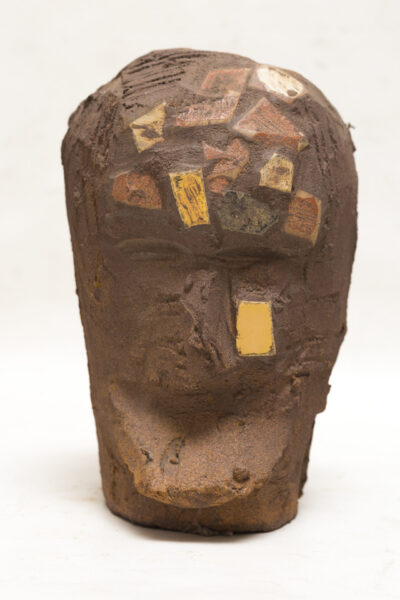
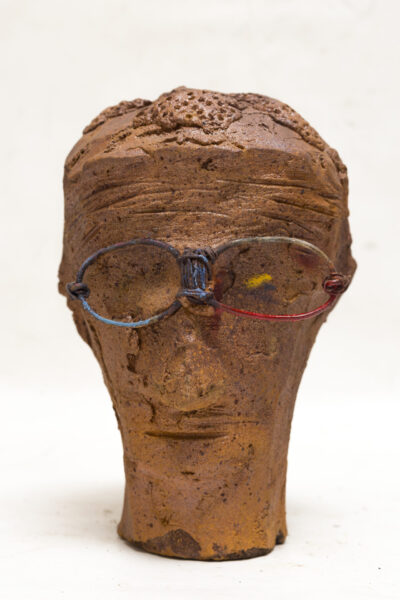
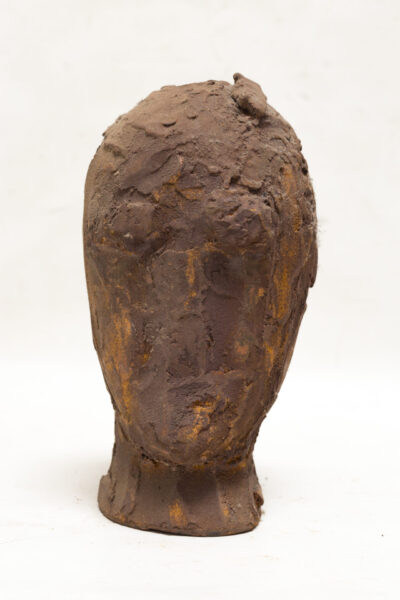
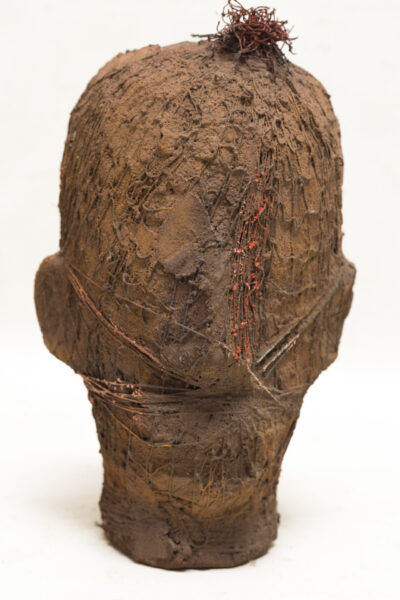
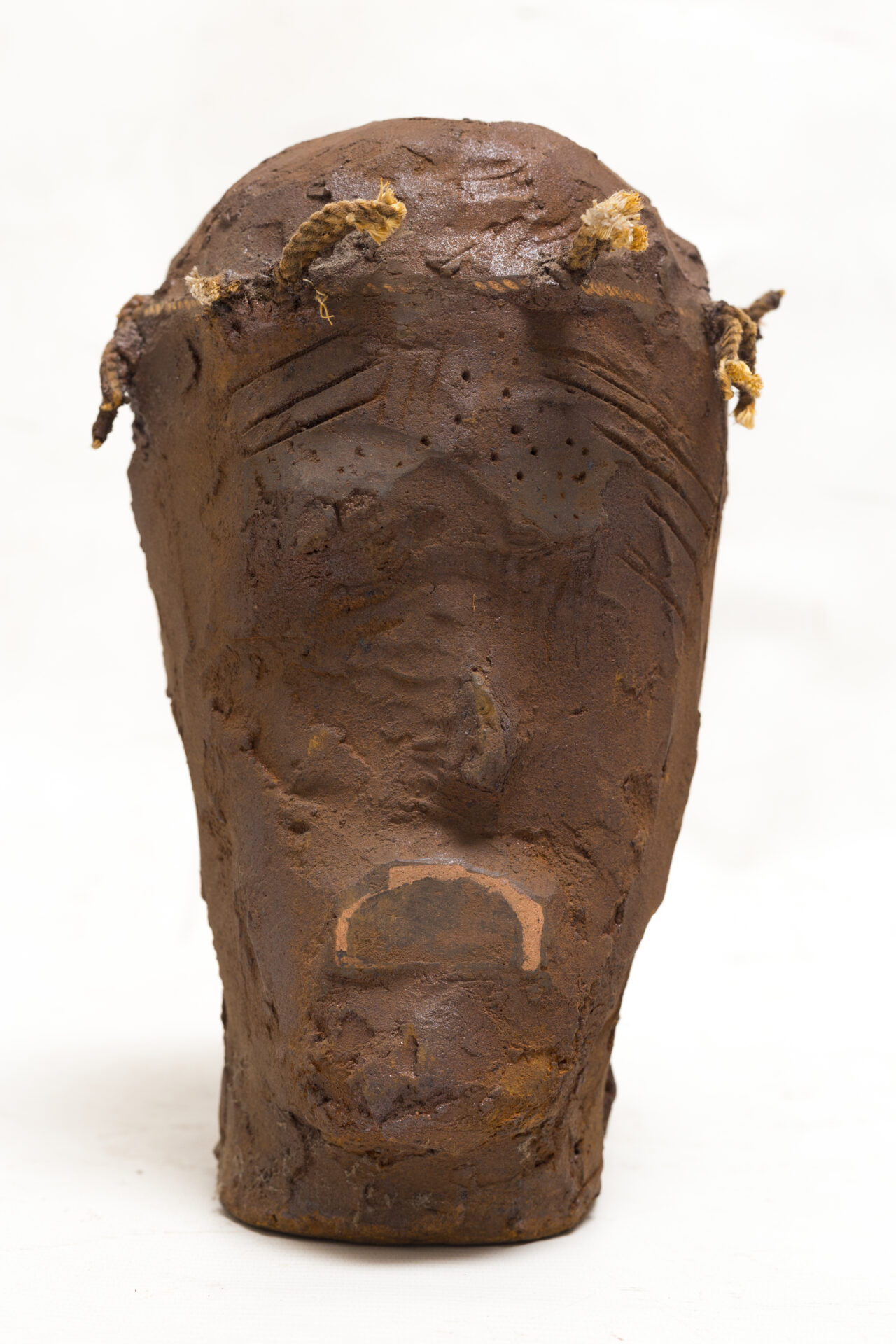
The Forgotten One is a terracotta sculpture covered in rust, symbolizing an identity erased by the passage of time. Its face, barely sketched, seems to emerge from a forgotten place. The reddish-brown nuances of the rust and the organic textures of the material tell a silent story: that of submerged memories, vanished identities, and the fragile traces left by existence. This piece invites us to reflect on the fragility of humanity and the fate of faces lost in the flow of history.
Artistic Description of the Collection
“100 Heads Without Faces” is a unique collection of one hundred sculptures crafted in terracotta and transformed by rust. Djonda Akpehou explores the relationship between memory, time, and identity. Each head is a trace, a fragment of history, a reminiscence of a known or imagined face. The deliberately altered forms and corroded textures materialize the progressive erosion of memories. This collection pays homage to forgotten memories and invisible narratives, while challenging our relationship with the past.
Symbolism
The Forgotten One evokes the corrosion of memories and the erasure of identities under the weight of time. Rust, far from symbolizing ruin, embodies transformation and living memory. This sculpture reflects the fragility of existence and individual stories in the face of collective oblivion. It invites us to rethink our place in time and to give voice to the traces that remain.
A Sculpted Memory, a Universal Story
The “100 Heads WITHOUT Faces” collection brings together one hundred unique sculptures, handcrafted from terracotta and rusted metal. These works embody the invisible faces of our collective history: undocumented migrants drowned at sea, victims of slavery, those forgotten in genocides, the anonymous whose memories are fading.
Each of these heads, deliberately devoid of features, symbolizes a life, a past, a story suspended in time. Faceless, they become the silent bearers of individual and collective memories, inviting us to reflect on our shared humanity.
Through this series, the artist invites us to acknowledge these erased lives and to rebuild bridges between the past and the future. “I open the graves of the undocumented migrants who drown in the seas and in the deserts, I denounce the macabre sounds of the cannons of war…”, he affirms, thus expressing the emotional and political power of this work.
“100 Heads WITHOUT Faces” is much more than an art collection: it is a sculptural archive, a call to remembrance, to dialogue, and to a better understanding of our common roots.
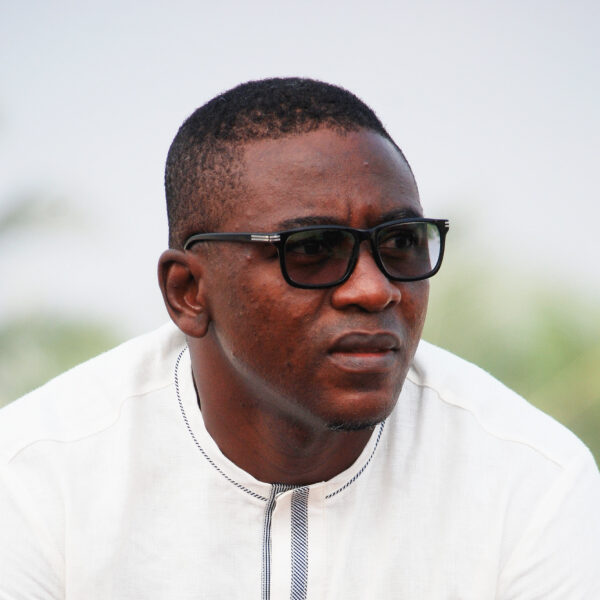
Passionate about collective memory and questions of identity, the artist works with clay and metal to give form to what is often invisible or forgotten. Through the series “100 Heads Without Faces,” he offers a space for reflection and dialogue on the wounds of the past and the hopes for a more just future.