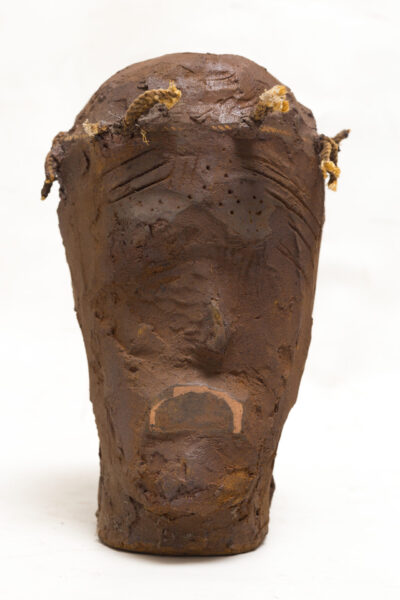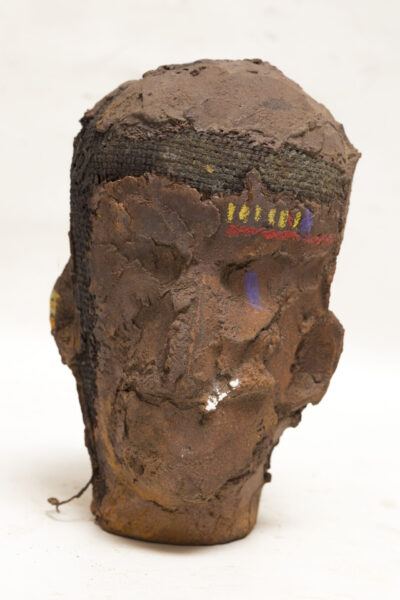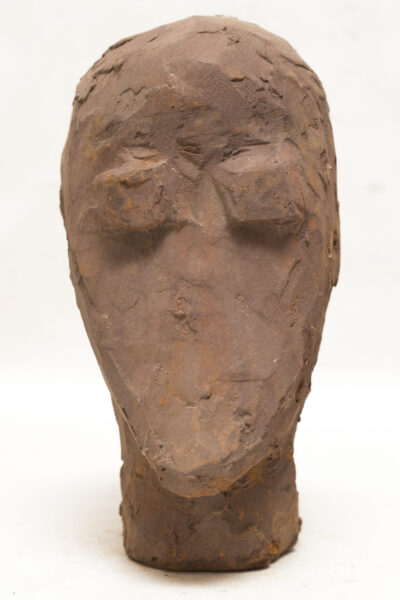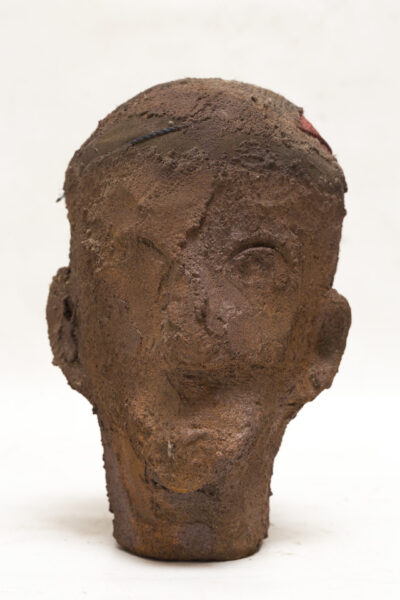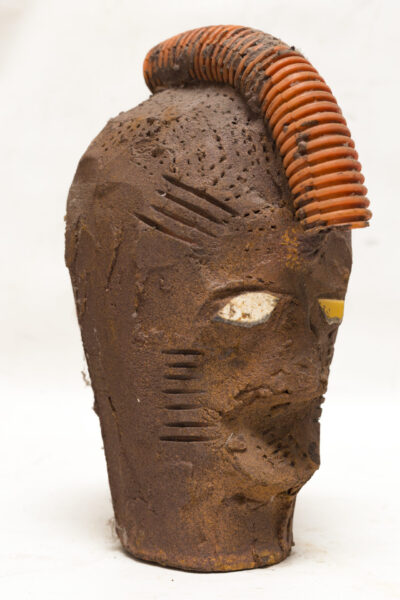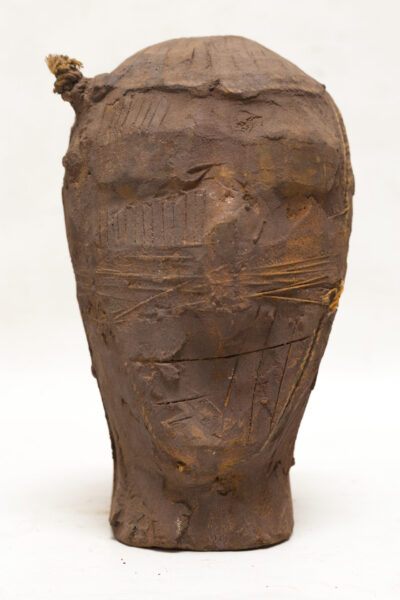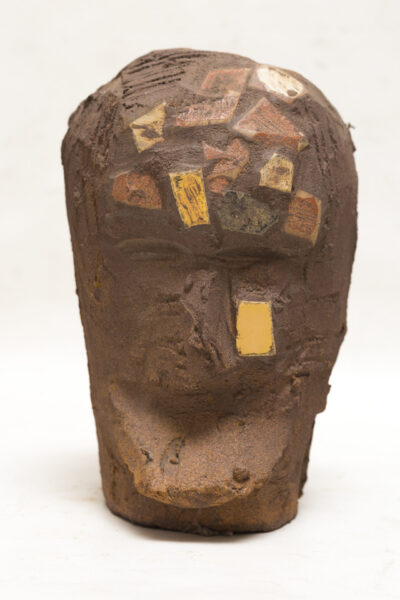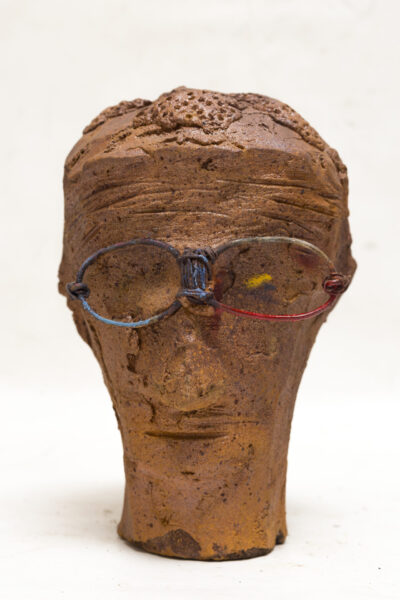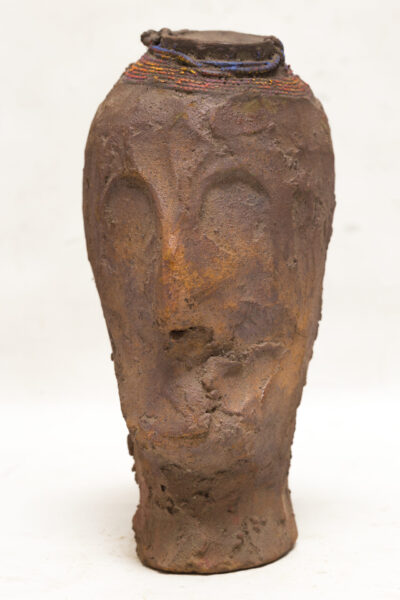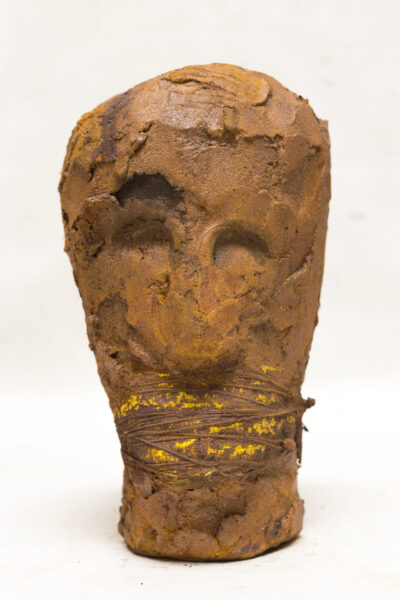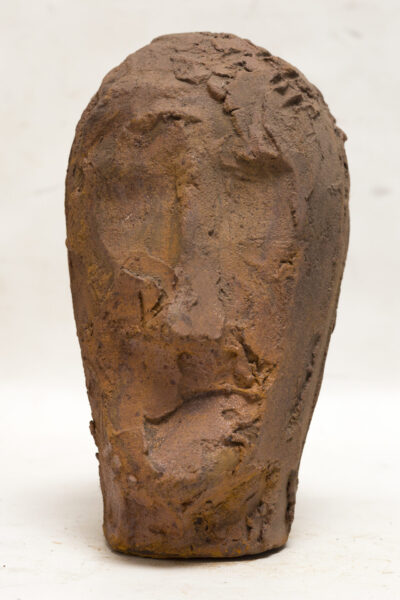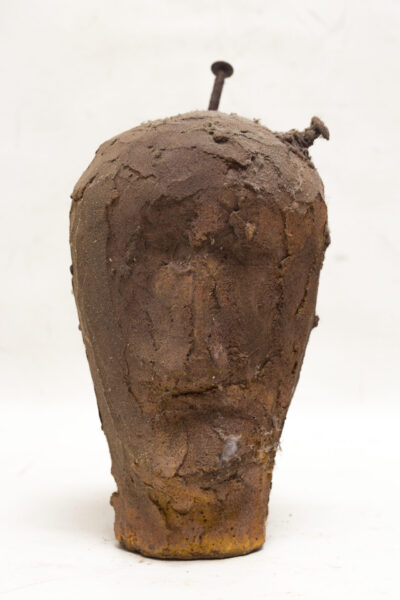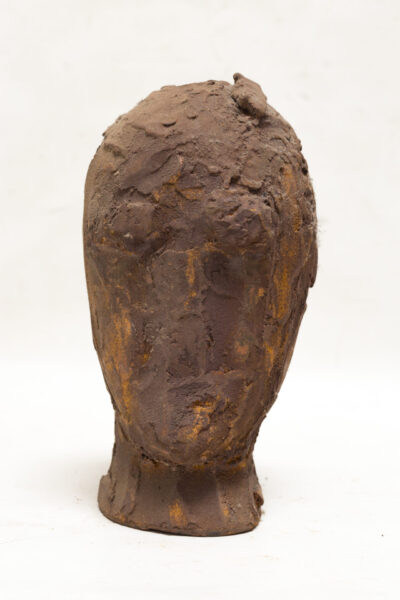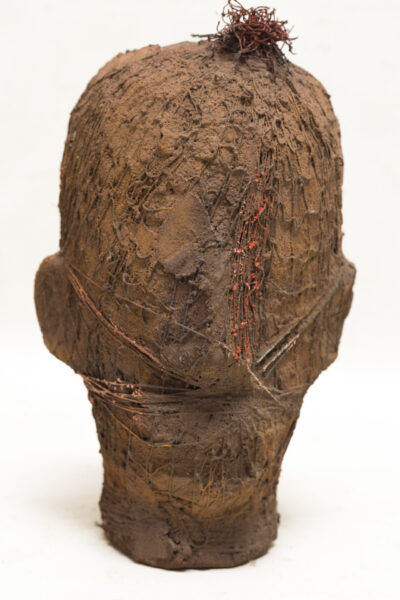

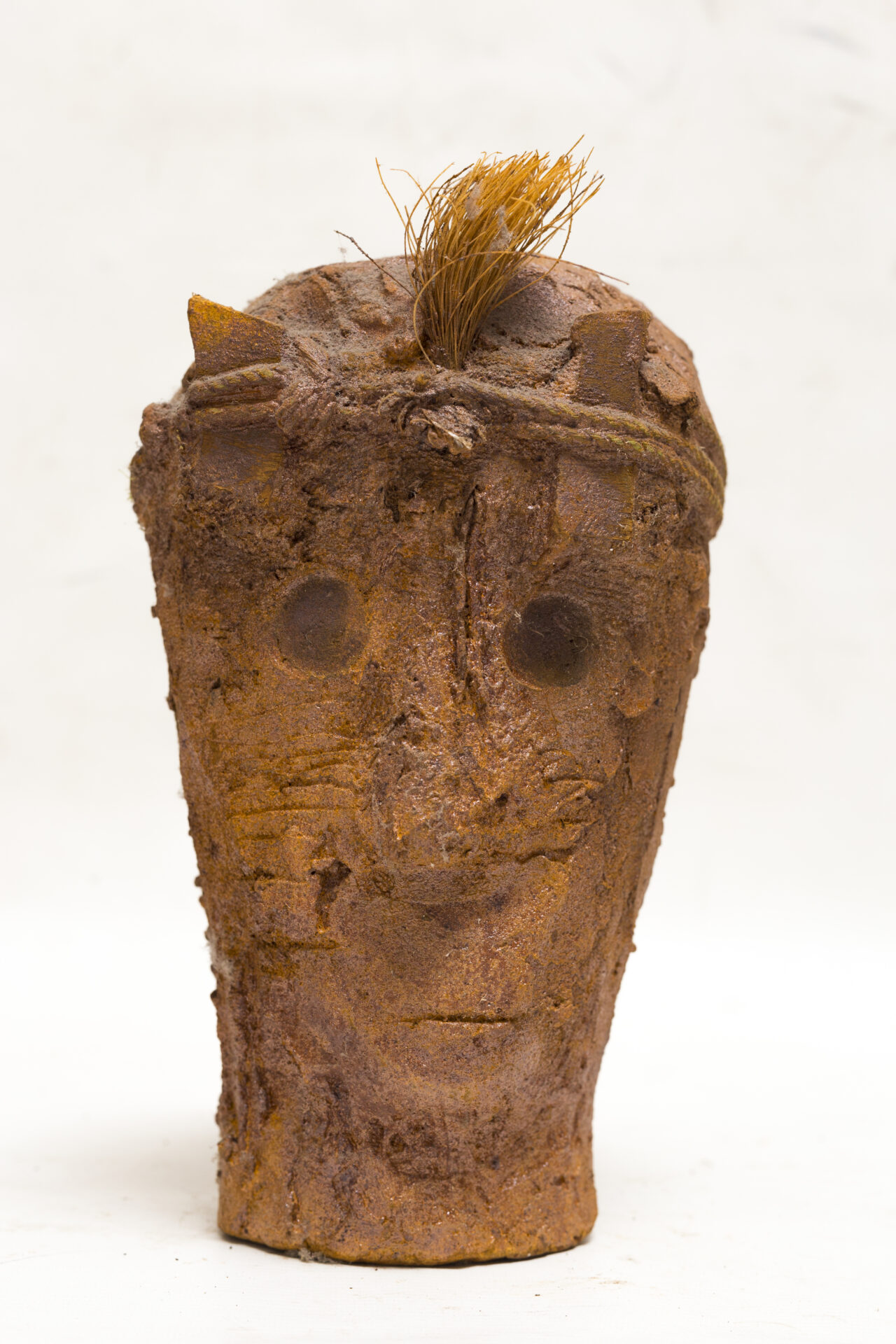
This head features a crest of plant fibers, evoking a rebellious or cultural hairstyle. The hollow circular eyes resemble a mask or totem, while the rudimentary engraved lines highlight the fragility of expression.
Within 100 Faceless Heads, this work questions social and cultural appearances. The hairstyle acts as a marker of individuality, yet the face remains generic and uncertain.
The fragile crest rising at the top symbolizes both pride and the precariousness of contemporary identities. It suggests that personal constructions — like an ostentatious hairstyle — rest upon vulnerable matter: clay.
A sculpted memory, a universal story
The “100 Faceless Heads” collection brings together one hundred unique sculptures, hand-shaped in terracotta and rusted metal. These works embody the invisible faces of our collective history: undocumented migrants drowned at sea, victims of slavery, the forgotten of genocides, the nameless whose memories fade away.
Each of these heads, deliberately devoid of features, symbolizes a life, a past, a suspended story. Faceless, they become the silent bearers of individual and collective memories, inviting us to reflect on our shared humanity.
Through this series, the artist calls on us to recognize these erased lives and to rebuild bridges between past and future. “I raise a glass to the undocumented who perish in seas and deserts, I denounce the macabre thunder of cannons and wars…” he declares, expressing the emotional and political power of this work.
“100 Faceless Heads” is far more than an art collection: it is a sculptural photo library, a call to memory, to dialogue, and to a deeper understanding of our common roots.
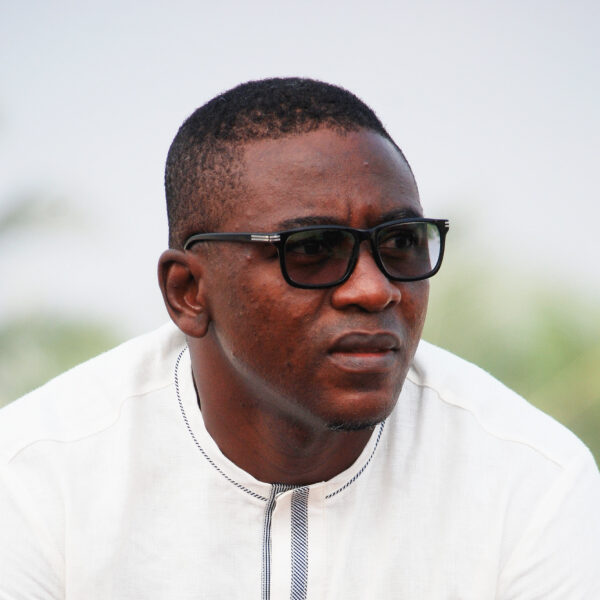
Passionate about collective memory and questions of identity, the artist works with clay and metal to give form to what is often invisible or forgotten. Through the series “100 Heads Without Faces,” he offers a space for reflection and dialogue on the wounds of the past and the hopes for a more just future.